
United States · Madison, Wisconsin
University of Wisconsin–Madison
Wisconsin's public land-grant flagship: big research university with direct-entry engineering and business
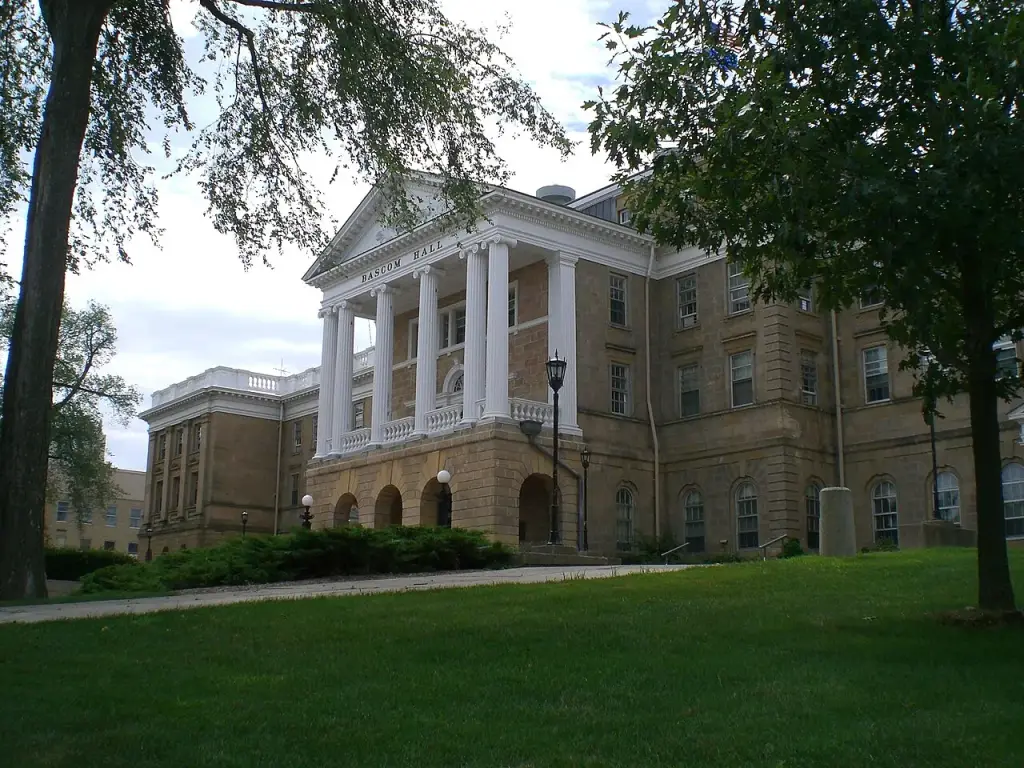
Photo: Wikimedia Commons · Public domain
- QS World Ranking 2027
- #131
- Founded
- 1848
- Students
- 52,000
- Bachelor's degree
- 4 years
- Acceptance rate
- ~41% overall, ~32% international (CDS fall 2025, admitted/applied)
- Typical IB offer
- Full IB Diploma (most applicants); an alternate school-leaving credential is accepted
- Typical A-level offer
- At least 3 A-levels for a competitive application; no grades published
- How admission works
- Apply with the Common App or the Universities of Wisconsin Application; 17 school units are required (4 English, 3 maths, 3 social science, 3 natural science, 4 electives). English: TOEFL iBT 4.5 (tests from 21 January 2026; 80 before), IELTS 6.5 or Duolingo 115; IB English HL does not waive the test. SAT/ACT are optional through the spring 2028 term.
- Language of instruction
- English
UW–Madison publishes no IB points or A-level grade threshold. It says it typically sees unweighted GPAs of 3.8–4.0 among applicants, which is a profile, not a cut-off.
Worth knowing
UW–Madison opened in 1849 on a 939-acre campus and counts 23 Nobel Prizes and 43 Pulitzer Prize winners. Its first-year retention is 96.3%, and 89.7% of the fall 2019 cohort graduated within six years.
How hard is it to get in, and why
For fall 2025 UW–Madison admitted 30,167 of 73,912 first-year applicants and 4,547 of 14,391 international applicants. Its Common Data Set rates the rigour of the school record and the academic GPA as very important; essay, recommendation and extracurriculars as important; the interview is not considered. Business and engineering are direct-entry programmes with different expectations, and SAT/ACT scores are optional through the spring 2028 term.
What it costs
Tuition
$44k–47k per year
Non-resident tuition for 2026–27 is $44,232 a year, up to $47,432 in the College of Engineering (an estimated $3,200 differential; business adds about $3,000, nursing $1,500). Segregated fees of $1,699 and a $330 new-student fee are billed on top, and the Regents reset tuition every year, so it is not fixed for four years; 2027–28 is not yet published. Living is the university's 2026–27 cost-of-attendance budget for non-residents: $14,994 for food and housing, up to $20,702 with supplies ($700 plus $1,100 added for a computer), personal ($2,618), transport ($1,222) and loan fees ($68), a sum of published lines.
Living costs
$15k–21k per year
Scholarships and financial aid
UW–Madison's Common Data Set marks institutional scholarship and grant aid for degree-seeking international undergraduates as not available. Plan to fund the full cost of attendance from family resources or outside awards.
How to apply
Apply with the Common App or the Universities of Wisconsin Application (use only one); the fee is $80. You write two essays, send one required recommendation and name a first and second choice major. Early Action closes 1 November with materials due 9 November and decisions by 31 January; Regular Decision closes 15 January with materials due 22 January. International applicants follow the same process, plus a curriculum-specific list of official documents and a TOEFL, IELTS or Duolingo score if schooled outside an English-speaking system.
Official websiteWhat makes it special
- Business (Wisconsin School of Business) and Engineering are direct-entry: you name the major on the application and are admitted to the school at the same time.
- Applicants to engineering must also list a major outside engineering as second choice, and a drop in grades can lead to the engineering admission being revoked.
- Fall 2025 enrolment was 51,822 students in 14 schools and colleges; about 3,600 degree-seeking undergraduates are international.
- SAT and ACT scores are optional through the spring 2028 term, and the university says you are not disadvantaged by leaving them out.
- 3,091 students took part in study abroad, study-away and international internship programmes in 2024–25.
About studying in United States
Four-year degrees and holistic admissions: universities read essays, recommendations and a record of what you have built or led, not only grades. Applications go through the Common App by early November (early rounds) or early January; most top universities have brought back SAT or ACT scores. Sticker prices are the highest in the world, but Harvard, MIT, Yale, Princeton and a few others admit international students without looking at family income and then cover the full demonstrated need.
Teaching staff
The dossier on teaching staff for this university is still being written.
The campus in photographs
Photographs come from Wikimedia Commons under free licences; the author and licence are shown on each image.
Reviews
No reviews yet. Visited, applied, or studied here? Be the first.