
Argentina · Buenos Aires, Argentina
University of Buenos Aires
Argentina's largest public university: free, with unrestricted entry through a common first year
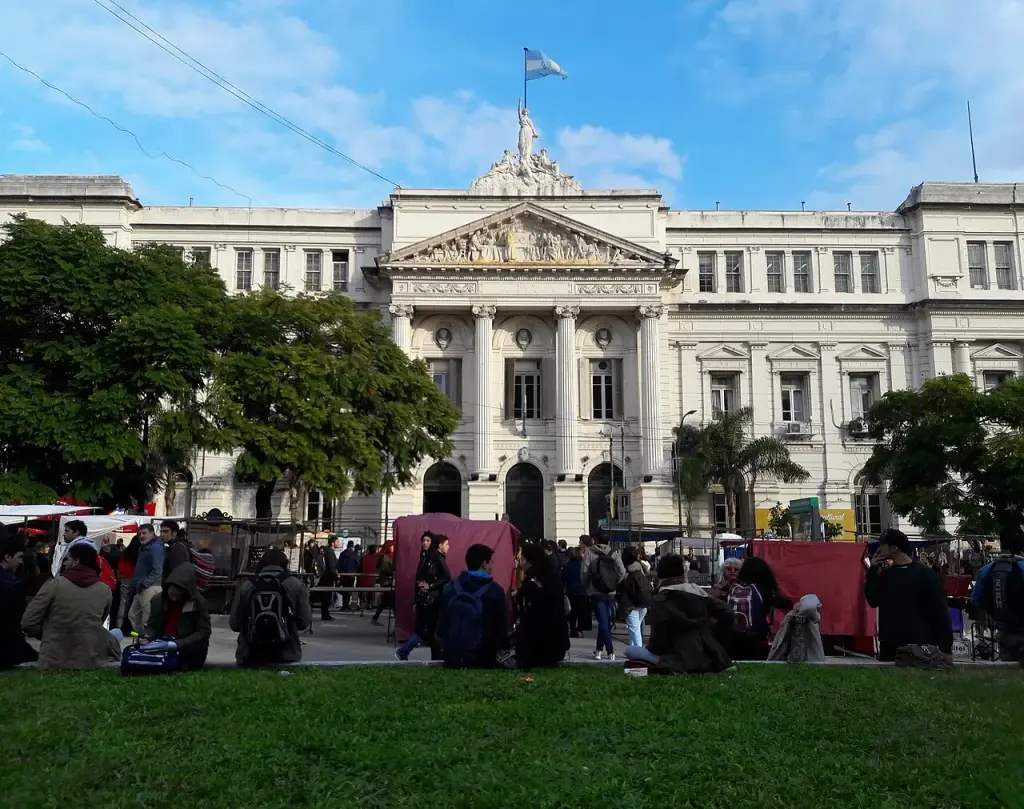
Photo: JonySniuk · CC BY-SA 4.0
- QS World Ranking 2027
- #84
- Founded
- 1821
- Students
- 350,000
- Bachelor's degree
- 5 years
- Acceptance rate
- Not applicable: unrestricted entry without an entrance exam (the filter is the CBC first year)
- How admission works
- No entrance exam: foreign applicants enrol in the CBC (Ciclo Básico Común), the common first year of every degree. The secondary school title must be validated by Argentina's Ministry of Education (convalidación if the country has an agreement with Argentina, reconocimiento de estudios if it has none) and legalised by UBA. A title from a non-Spanish-speaking country also needs Spanish at level C1: SIELE Global C1 or UBA's own Advanced Spanish certificate.
- Language of instruction
- Spanish; Spanish at level C1 required if the school title is from a non-Spanish-speaking country
The university publishes no IB or A-level requirement.
Worth knowing
UBA was founded on 12 August 1821. Free university study was set by decree in 1949, and the CBC, created in 1985, introduced direct entry. By the university's own count, 5 Nobel laureates, 3 of them in the sciences, and 17 Argentine presidents studied there.
How hard is it to get in, and why
UBA states that entry is unrestricted and without an entrance exam, so nothing selects applicants at the door. The filter is the CBC: six subjects, each with two partial exams, a final exam passed with at least 4 out of 10, and a retake if a subject is failed. For a foreign applicant the real hurdles are paperwork and language: validation of the school title and Spanish at level C1. Rated by mechanism (open admission), not by a published rate.
What it costs
Tuition
$0 per year
UBA states: "Los estudios de grado en la UBA son gratuitos para los ciudadanos argentinos y extranjeros" (undergraduate study is free for Argentine citizens and foreigners). The university names no compulsory fee for foreign undergraduates. UBA publishes no current living-cost estimate for students from abroad, so none is shown; ask the university.
Living costs
not disclosed
Scholarships and financial aid
Undergraduate study is free for foreigners and Argentines alike. The university names no scholarship specifically for foreign undergraduates.
How to apply
Apply on UBA's enrolment platform for the CBC: pre-enrolment, choice of campus and shift, then handing in documents. The platform asks for an Argentine ID (DNI), but a foreigner without one can register provisionally with the ID used for the title validation. If the title is not yet issued, a certificate of completed secondary studies in progress is accepted at registration, and all school documents must be legalised before the CBC ends. The CBC calendar for 2026 puts the second term between 10 August and 20 November 2026; enrolment opens before each term and the 2027 dates are not yet published.
Official websiteWhat makes it special
- 13 faculties, 6 hospitals and 74 research institutes (UBA, 2026).
- 116 undergraduate degrees; the CBC is the first year of all of them and has six subjects (seven for Architecture, Design and Urbanism).
- Medicine now takes 6 years under the new plan instead of 7.5.
- Intermediate degrees after about three years in Engineering (for example Informatics, Chemistry, Electronics tracks) and shorter technical courses of 1 to 4 CBC subjects.
- 6 secondary schools run by the university, including the Colegio Nacional de Buenos Aires.
About studying in Argentina
Degrees at the University of Buenos Aires (UBA) are long and start with a common first year, the CBC: Exact and Natural Sciences usually take five years or more, and Medicine six under the new plan. UBA states that undergraduate study is free for Argentines and foreigners alike, and that entry is unrestricted and without an entrance exam. Teaching is in Spanish, and the university's rules ask for proof of a minimum Spanish level where applicable. To register you need an Argentine ID (DNI), although a foreigner without one can register provisionally with the document used for validating the school title, and the secondary school title itself must be validated by Argentina's Ministry of Education. The honest caveat is bureaucracy: residency status, validation of the school title and the ID can take longer than the application.
Teaching staff
The dossier on teaching staff for this university is still being written.
The campus in photographs
Photographs come from Wikimedia Commons under free licences; the author and licence are shown on each image.
Reviews
No reviews yet. Visited, applied, or studied here? Be the first.