
Japan · Tokyo, Meguro Ward (Ookayama)
Institute of Science Tokyo
Japan's science and engineering university (former Tokyo Tech), merged with Tokyo Medical and Dental in 2024
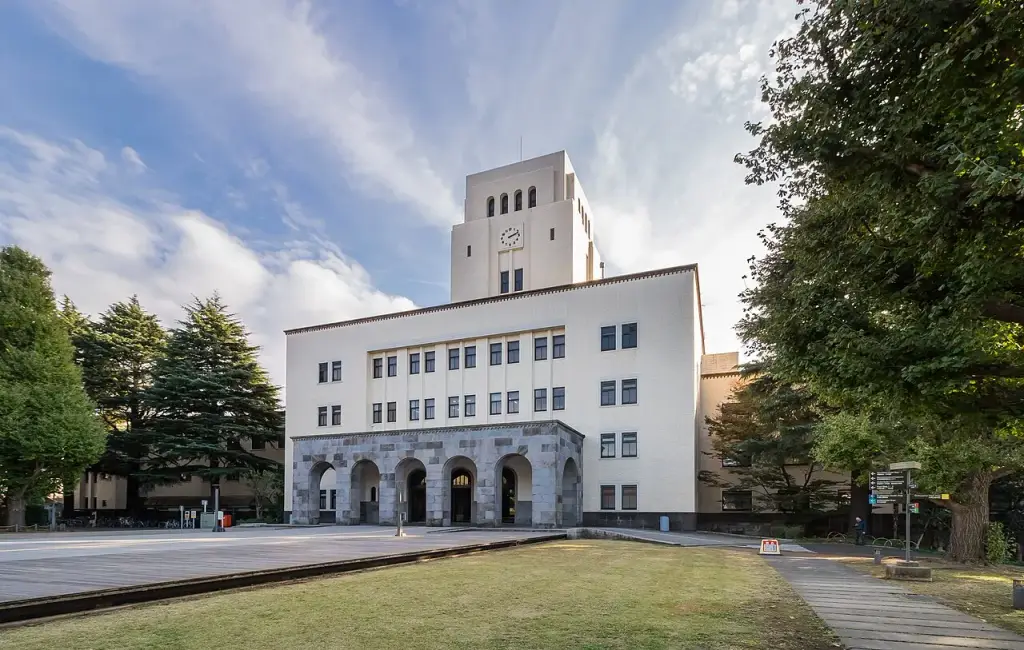
Photo: Kakidai · CC BY-SA 4.0
- QS World Ranking 2027
- #97
- Founded
- 1881
- Students
- 14,000
- Bachelor's degree
- 4 years
- Acceptance rate
- Not published; the foreign-applicant route lists a few places to 25 per school (10 for Engineering), April 2027 entry
- Typical IB offer
- IB Diploma accepted as an eligibility basis; no points cut-off published
- Typical A-level offer
- GCE A-level or International A-level accepted as an eligibility basis; no grade cut-off published
- How admission works
- Route for privately financed international students (six science and engineering schools, taught in Japanese): EJU of 2026 (June or November sitting) with Japanese at least 290/450 and Physics, Chemistry and Maths Course 2 at least 310/400, the science papers in English or Japanese. Documents must arrive 21-23 December 2026 (web registration from 18 December); written test 20 January 2027 and interview 10 February 2027, both on the Ookayama campus. Results 9 March 2027, enrolment procedure by 17 March 2027, entrance ceremony planned for early April 2027.
- Language of instruction
- Japanese for all bachelor's programmes except GSEP, which is taught in English; the route for foreign graduates needs EJU Japanese of 290/450
The English-taught GSEP programme (10 places for privately funded students) has already held its April 2027 round: applications ran 12-21 August 2026 and results are due 13 November 2026. The university says its selection process will change from AY2028 enrolment.
Worth knowing
Science Tokyo was created on 1 October 2024 by merging Tokyo Institute of Technology, which began as Tokyo Vocational School in 1881, with Tokyo Medical and Dental University. The science and engineering side has six schools; applicants to the foreign-student route list up to five preferred departments.
How hard is it to get in, and why
The route for foreign graduates sets hard bars before any selection: EJU Japanese of at least 290 out of 450 and three science subjects of at least 310 out of 400. The guide lists a few places for some schools and 5 to 25 for others, and says a first-stage cut by EJU score may be used if applicants exceed three times the quota. The second stage is a written test in maths, physics, chemistry, English and Japanese, then an interview. The closest anchors are NUS and HKU: a small quota and an exam, with Japanese as the extra filter.
What it costs
Tuition
$4k per year
The fee page lists undergraduate tuition for science and engineering at ¥635,400 a year (¥642,960 for the medical and dental fields), an admission fee of ¥282,000 and an application fee of ¥17,000; the 2027 guide quotes the same amounts for April 2027 entry as planned and subject to change. The living range is a calculation, accommodation only: the international student guide lists the dormitories reserved for new international students at ¥27,500 a month (Umegaoka and Shofu, ¥20,000 rent plus a ¥7,500 service fee) to ¥39,500 (Komaba, ¥30,000 plus ¥9,500), times 12. Entrance fees of ¥20,000 to ¥32,200 are extra, rooms are limited and not assigned to every new student, and food, utilities and other costs are not included. The university publishes no total cost-of-living estimate.
Living costs
$2k–3k per year
Scholarships and financial aid
For GSEP, eight applicants are recommended for a MEXT scholarship: no enrollment fee or tuition and a monthly stipend of ¥120,000 for four years. Privately financed applicants living abroad may apply for the JASSO Honors Scholarship of ¥48,000 a month (April 2027 to March 2028), and fees are still payable. The university says other scholarships for international students exist but are usually awarded after admission.
How to apply
Applicants to the Japanese-taught route register on the web application site from 18 December 2026, pay the ¥17,000 fee between 14 and 23 December, and send documents by registered, express mail to arrive 21-23 December 2026. The package includes three years of transcripts, graduation proof, an EJU admission ticket copy and the fee receipt; TOEFL iBT or IELTS Academic is optional but recommended for the interview. The first stage may be an EJU cut if applications exceed three times the quota (result 6 January 2027), followed by the written test on 20 January and the interview on 10 February 2027. Results are posted on 9 March 2027.
Official websiteWhat makes it special
- GSEP: a Bachelor of Engineering taught entirely in English, offered only in the Department of Transdisciplinary Science and Engineering; the university lists 8 MEXT scholarship places and 10 for privately funded students.
- GSEP asks for a principal's evaluation form, a TOEFL iBT, TOEIC L&R or IELTS Academic report with no minimum score, and a written exam in high-school maths, physics and chemistry plus an interview; IB and A-level results are optional reference material.
- Pre-arrival Special Recommendation: only the Department of Transdisciplinary Science and Engineering recommends a few applicants who live abroad, who then sit an online interview and no exam in Japan; EJU science subjects must total at least 350/400 and Japanese is optional. Recommendation requests are accepted 10-16 December 2026.
- The first-stage written test counts only candidates who score at least 50 out of 100 in the Japanese paper.
- Dormitories exclusively for new international students at Komaba, Umegaoka and Shofu, with rooms allocated only when places are free.
About studying in Japan
Four-year degrees, taught mostly in Japanese. Admission usually runs through each university, and many ask for the EJU exam, which can be taken in English or Japanese except for its Japanese-language test. English-taught bachelor's options are few: Kyoto's international undergraduate programme (iUP) uses English and Japanese, and the University of Tokyo's all-English Global Science Course is a transfer programme entering in year 3, so it does not suit school-leavers. National universities charge a standard ¥535,800 a year plus an entrance fee of about ¥282,000, but the ministry allows up to 1.2 times the standard and Tohoku will raise international tuition to ¥900,000 from 2027, so fees may rise. Private universities cost more, and the language is the real barrier outside a few programmes.
Teaching staff
The dossier on teaching staff for this university is still being written.
The campus in photographs
Photographs come from Wikimedia Commons under free licences; the author and licence are shown on each image.
Reviews
No reviews yet. Visited, applied, or studied here? Be the first.