
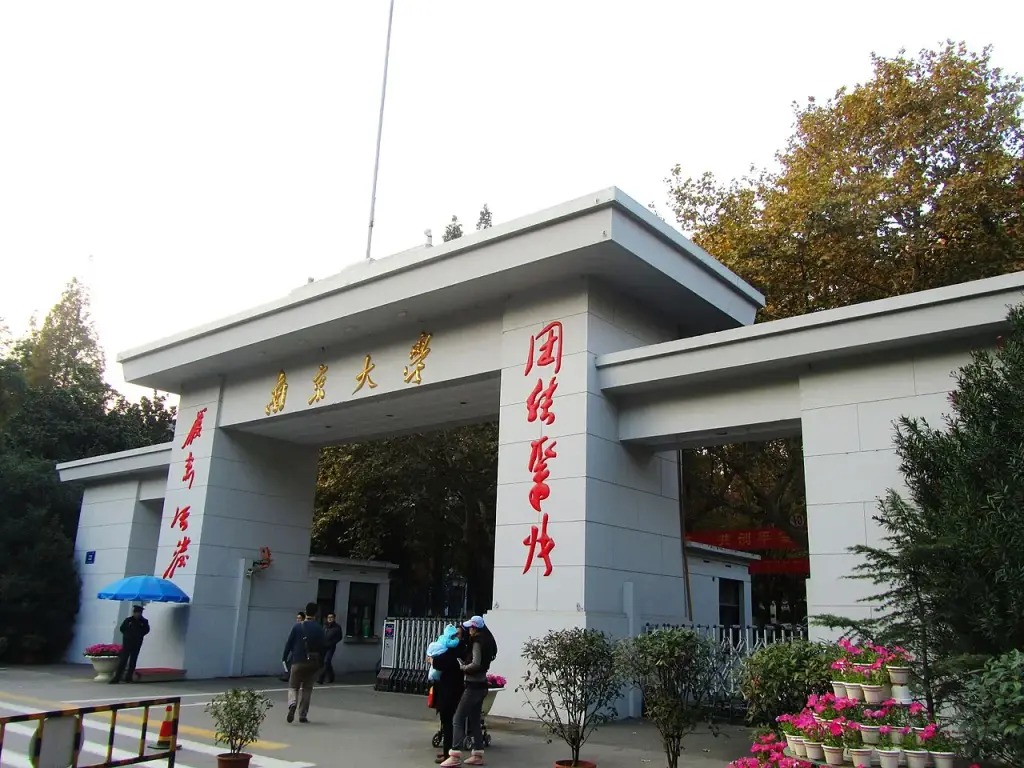
China · Nanjing, Jiangsu
Nanjing University
A C9 League research university in Nanjing, with all undergraduate teaching for foreigners in Chinese
Photo: 猫猫的日记本 · CC BY-SA 3.0
- QS World Ranking 2027
- #90
- Founded
- 1902
- Students
- 42,000
- Bachelor's degree
- 4 years
- Acceptance rate
- Not published; admission by HSK 5, CSCA report, written examination and interview
- How admission works
- Applicants must be 18 or older, hold a non-Chinese passport and have finished high school. They need HSK 5 with a score of at least 180 (not required after 12 years of Chinese-medium schooling in Malaysia or Singapore) and a CSCA report. A-level, AP, ACT, IB, SAT and AST scores can be submitted and are valid for two years.
- Language of instruction
- Chinese (all undergraduate majors are taught in Chinese; HSK 5 with 180 or more required)
The university publishes no IB or A-level requirement. The page speaks of the 2026/2027 academic year, with a CSCA deadline of 15 May 2026 for last year's cycle; the 2027 intake notice has not been published.
Worth knowing
The university traces its history to Sanjiang Normal School, established in 1902, and became Nanjing University in 1950. In the 1952 national restructuring it was merged with Jinling University and moved to Gulou, where Jinling College had stood.
How hard is it to get in, and why
The university publishes no admission rate or IB or A-level threshold. International applicants need HSK 5 with 180 or more and a CSCA report, and the Institute for International Students lists consultation, a written examination and an interview in its March-May schedule. All undergraduate majors are taught in Chinese, so the language is the main filter. By mechanism it is closest to HKUST: documents plus an exam and interview, with no published cut-off.
What it costs
Tuition
$3k–6k per year
The Bachelor's page gives tuition per academic year as RMB 21,000 for liberal arts, RMB 24,000 for science and business, RMB 32,000 for the Software Institute and RMB 42,000 for the Medical School; the page is undated and names no intake. Insurance is RMB 800 a year. Living: freshmen live on the Gulou campus at RMB 52 a day for a bed in a double room or RMB 67 a day for a single, so the range shown is those rates times 365 (a calculation, accommodation only). Xianlin campus beds cost RMB 3,000 per semester, and off-campus rent is normally RMB 2,500 to 5,000 a month.
Living costs
$3k–4k per year
Scholarships and financial aid
The Bachelor's page lists a separate contact for the Chinese Government Scholarship (CSC), and the dormitory notice names CSC, ICLTS and CCSP scholarship students, who do not need to reserve a room. The university publishes no scholarship amounts for foreign bachelor's students on these pages.
How to apply
Applications go through istudy.nju.edu.cn with an RMB 500 fee. The page's schedule is online application, physical examination, consultation, written examination and interview from March to May, admission notice from June to August and registration in September; it does not state the 2027 dates. Documents include the high-school score report, HSK certificate, CSCA report, two recommendation letters and a personal statement. Last year's CSCA deadline for NJU was 15 May 2026.
Official websiteWhat makes it special
- 22 disciplines are in the world top 1% by ESI and 16 in the national double world-class project.
- Campuses in Gulou, Xianlin, Pukou and Suzhou; undergraduate freshmen of all institutes study on the Gulou campus.
- Undergraduate options for foreigners include a Software Institute and a Medical School at their own tuition levels, plus an architecture track that asks for professional work.
- Dormitories for international students stand on the Gulou and Xianlin campuses, and self-funded students must reserve online with no guaranteed place.
About studying in China
Four-year degrees, taught mainly in Chinese; tuition and English-taught options differ by university and programme. Peking University takes international applicants through its own online system, or through the Chinese Government Scholarship, and its route without a written exam asks for HSK 6 (score 210 or more), or a 6 or above in IB Chinese HL, so the language bar at the top is high. Check each university's own page for tuition and for any English-taught bachelor's programmes. The honest caveat is that for most students the language, not the grades, decides whether China is realistic.
Teaching staff
The dossier on teaching staff for this university is still being written.
The campus in photographs
Photographs come from Wikimedia Commons under free licences; the author and licence are shown on each image.
Reviews
No reviews yet. Visited, applied, or studied here? Be the first.