
India · Mumbai, Maharashtra
Indian Institute of Technology Bombay
A major IIT in Powai, Mumbai, with 17 departments
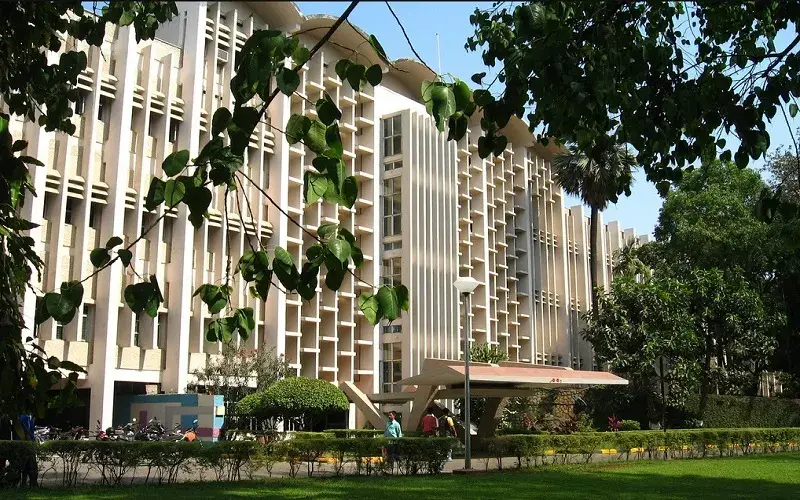
Photo: Arne Hückelheim · CC BY-SA 3.0
- QS World Ranking 2027
- #134
- Founded
- 1958
- Students
- 13,000
- Bachelor's degree
- 4 years
- Acceptance rate
- Not published; seats for foreign nationals are allotted by JEE (Advanced) rank, capped at 10% of each programme's seats
- Typical IB offer
- IB Diploma accepted as Class XII equivalent; Physics, Chemistry, Maths compulsory; no IB points cut-off
- Typical A-level offer
- GCE A-level accepted as Class XII equivalent; Physics, Chemistry, Maths compulsory; no grade cut-off
- How admission works
- Foreign nationals register directly for JEE (Advanced) and do not take JEE (Main); in the 2026 cycle they must have been born on or after 1 October 2001 and have taken Class XII (or equivalent) for the first time in 2025 or 2026 (a first sitting in 2024 or earlier does not qualify, except where the board published its 2023-24 results on or after 18 June 2024). Class XII performance must be at least 75% aggregate over five subjects (Physics, Chemistry, Maths, a language and the best other subject) or in the board's top 20 percentile; the rules do not say how IB grades convert, and a board that gives only letter grades must supply a certificate of equivalent marks. English is the language of study and the JEE (Advanced) brochure lists no English test.
- Language of instruction
- English
The rules above are for the 2026 cycle; the 2027 brochure is not yet published. IB students must check the 2027 rules on whether a Diploma sat in May 2027 qualifies.
Worth knowing
IIT Bombay was set up in 1958 and the same brochure puts its student strength at 13,366 (6,227 UG, 3,146 PG, 3,620 PhD, 373 PDF). It lists 17 departments, 13 centres and 3 schools.
How hard is it to get in, and why
There is no interview, essay or school-grade ranking: a foreign national must sit JEE (Advanced) and then hold a rank at or better than the closing rank of the OPEN category in the programme they want. Foreign candidates are ranked in the same list as Indian candidates, so the bar is the national one even though the seats are extra (supernumerary). Rated 4, closest to NUS: a single hard exam decides, and popular programmes close at the top of the rank list.
What it costs
Tuition
$6k per year
For students admitted in 2026 the statutory tuition fee for foreign nationals is Rs 3,00,000 per semester; B.Tech, B.S. and B.Des. are 4-year programmes of 8 semesters, so Rs 6,00,000 a year is a calculation (2 semesters a year), and the 2027 schedule is not yet published. Other fees add Rs 8,150 per semester plus Rs 16,000 at admission and Rs 10,000 of refundable deposits. Living is the recurring Autumn 2026-27 hostel charges of Rs 14,950 per semester (the circular's Rs 19,950 total less a one-time refundable Rs 5,000 deposit, which is left out) plus the semester mess advance of Rs 22,500, Rs 37,450 per semester, doubled to Rs 74,900 a year: a calculation that covers housing and mess and assumes the Autumn rates for both semesters.
Living costs
$800 per year
Scholarships and financial aid
The tuition exemptions in the fee documents are for SC, ST and PwD students, which the fee table applies to Indian nationals. Foreign nationals with a valid PIO/OCI card issued before 4 March 2021 who are allotted an OPEN seat pay the fees of Indian nationals.
How to apply
Admission to every IIT runs through JEE (Advanced), which foreign nationals can enter directly, followed by seat allocation through JoSAA, where candidates with a foreign tag are allotted seats after Indian candidates in each round. In the 2026 cycle direct registration for foreign nationals opened on 6 April and, after an extension, closed on 5 May 2026 at 23:59 IST; the exam was on 17 May 2026, the registration fee for a non-SAARC resident was US$200 at an Indian centre and US$300 at a centre abroad, and the 2026 centres abroad were Abu Dhabi and Kathmandu. A candidate may attempt JEE (Advanced) twice in two consecutive years, and the 2027 dates have not been published.
Official websiteWhat makes it special
- Undergraduate programmes: B.Tech., B.Tech.+M.Tech. dual degree, B.Des. and B.S., all of 4 years except the 5-year dual degree.
- 760+ faculty and 70,000+ alumni, per the institute's 2026 brochure.
- Located in Powai, a northern suburb of Mumbai.
- The foreign-national seat is supernumerary: it sits on top of the regular intake, up to 10% of each programme's seats.
About studying in India
Four-year engineering degrees (B.Tech) taught in English. The IITs admit foreign nationals through JEE Advanced, for which foreign candidates do not need to take JEE Main. A separate route, the Direct Admission of Students Abroad (DASA) scheme run by India's Ministry of Education, places foreign nationals and OCI/PIO candidates at NITs, IIITs and other centrally funded technical institutes jointly with the CSAB special rounds, not at the IITs. DASA tuition is about US$4,000 per semester for non-SAARC students (US$2,000 for SAARC), roughly US$8,000 a year, plus a US$300 registration fee and first-semester charges in rupees. Seats for foreigners are few, entrance exams are demanding, and rights to work after graduating are limited.
Teaching staff
The dossier on teaching staff for this university is still being written.
The campus in photographs
Photographs come from Wikimedia Commons under free licences; the author and licence are shown on each image.
Reviews
No reviews yet. Visited, applied, or studied here? Be the first.