Germany · Heidelberg, Baden-Württemberg
Heidelberg University
A medieval-founded research university in a small Neckar town, and the one here that charges non-EU students tuition
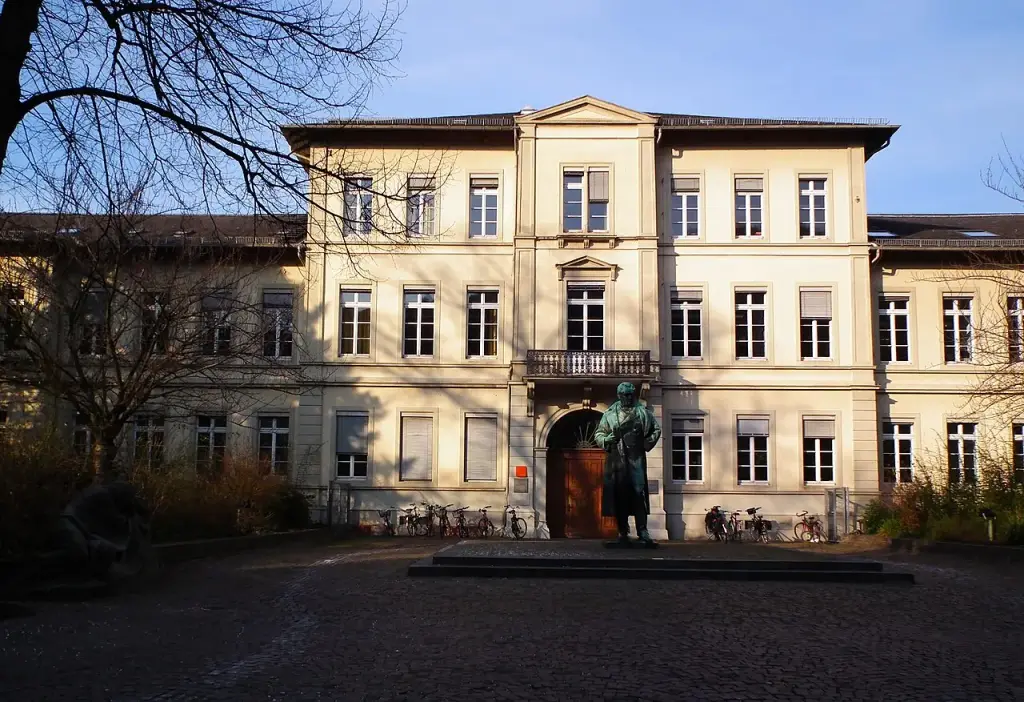
Photo: 4028mdk09 · CC BY-SA 3.0
- QS World Ranking 2027
- #86
- Founded
- 1386
- Students
- 32,000
- Bachelor's degree
- 3 years
- Acceptance rate
- Not published; 8–10% of places in admission-restricted programmes are available to international applicants
- Typical IB offer
- Diploma: 2 languages, science, maths, social science, grade 4+; 1+ HL in language, maths or science
- How admission works
- Non-EU applicants with a foreign certificate apply directly to Heidelberg through its heiCO portal, and the university rates foreign qualifications by the evaluation framework of the national Central Office for Foreign Education (ZAB). A certificate rated only partly comparable to the Abitur requires the Feststellungsprüfung after the two-semester Studienkolleg. The IB conditions are the national KMK rules; Maths at SL gives only subject-specific entrance (except for schools on the KMK exception list), and one grade 3 is allowed if offset by a 5 and 24 points elsewhere.
- Language of instruction
- German for every bachelor's programme; no English-taught bachelor's is offered. DSH-2 or an equivalent (TestDaF 4 in all parts, Goethe C2, telc Deutsch C1 Hochschule) is normally proven at enrolment, and some programmes require it at application.
Heidelberg states no IB points cut-off and no A-level requirement; the IB subject conditions above come from the KMK recognition agreement. How an A-level certificate is rated is decided case by case under the ZAB framework.
Worth knowing
Heidelberg's own planning page prices a six-semester bachelor's at about €35,700 in living costs, based on the visa minimum, plus €9,000 in tuition for fee-paying students. The 1,500-euro fee applies at every state university in Baden-Württemberg, not only here.
How hard is it to get in, and why
In admission-restricted programmes 8–10% of places go to international applicants, and where applications exceed places the university runs its own selection procedure; some subjects use an entrance examination instead. Subjects without restrictions admit applicants who meet the legal requirements. Every bachelor's programme is taught in German, and for some (Biochemistry, Philosophy and others) DSH-2 must be proven already at the time of application.
What it costs
Tuition
$4k per year
Non-EU students with a foreign entrance qualification pay €1,500 tuition per semester in Baden-Württemberg (bachelor's and state-examination programmes, medicine included), plus a semester contribution of €189.80 (winter semester 2026/27). Two semesters come to €3,380 a year. Living costs run from the German student-visa minimum of €992 a month (€11,904 a year) to the university's own upper estimate of €2,013 a month; its lower estimate of €895 is below the visa minimum.
Living costs
$13k–27k per year
Scholarships and financial aid
The university may exempt up to 5% of fee-paying international students from tuition under its own statute; applications are due 15 July for the next winter semester and 15 January for the next summer semester. A hardship remission is possible only if the €1,500 has not yet been paid. Heidelberg itself says few scholarships exist in Germany and advises applying from the home country, often before applying for a place.
How to apply
Non-EU applicants with a foreign school certificate apply directly through the heiCO portal. Subjects without admission limits are open from 1 June to 31 October for the winter semester; subjects with admission limits or an entrance examination run from 1 June to 15 July (1 December to 15 January for the summer semester). Medicine, dentistry and pharmacy are winter-semester only, 1 June to 15 July. Selection is by the university's own procedure or an entrance examination, with proof of German required at enrolment or, for some programmes, at application.
Official websiteWhat makes it special
- 32,178 students, of whom 6,633 are international (university facts and figures).
- Founded in 1386, the university's own site still counts its years from that date.
- Heidelberg runs its own Studienkolleg: two-semester, subject-specific preparation for the Feststellungsprüfung, open to applicants whose certificate gives only partial access.
- Rent is about €350 in a student-union hall and up to about €950 on the private market (university estimate).
- Up to 5% of fee-paying international students can be exempted from tuition under the university's own statute.
About studying in Germany
Public universities are close to free for most students; Bavaria, where TU Munich sits, has introduced a fee for students from outside the EU, still a fraction of Anglo-American prices. Most bachelor's programmes are taught in German (level C1 is expected), with a growing number in English. Admission for an IB Diploma is largely formal, and the real test is keeping up with a demanding, self-directed course.
Teaching staff
The dossier on teaching staff for this university is still being written.
The campus in photographs
Photographs come from Wikimedia Commons under free licences; the author and licence are shown on each image.
Reviews
No reviews yet. Visited, applied, or studied here? Be the first.