South Korea · Seoul, Seongdong-gu
Hanyang University
Seoul private university that began as Korea's first engineering institute, with three English-taught undergraduate tracks
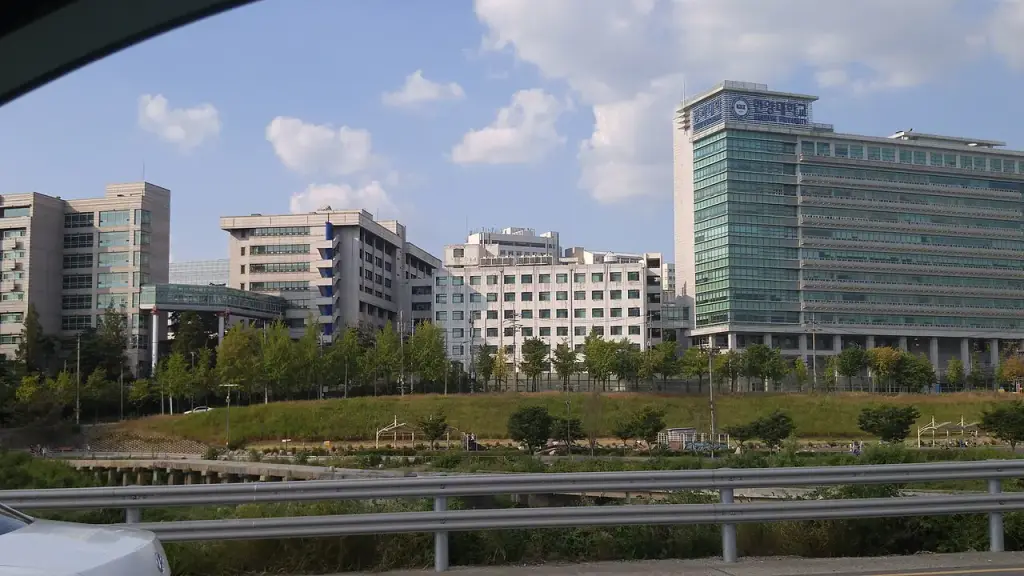
Photo: Jocelyndurrey · CC BY-SA 4.0
- QS World Ranking 2027
- #155
- Founded
- 1939
- Students
- 38,000
- Bachelor's degree
- 4 years
- Acceptance rate
- Not published: Hanyang says it does not disclose the content of its evaluation process or the results
- How admission works
- Route for applicants who are foreign nationals and whose parents are both foreign nationals; the applicant must have graduated, or be due to graduate, from high school. Korean-taught majors: TOPIK or TOPIK IBT level 4, or level 4 at Hanyang's own language institute, is needed to start degree classes but not to apply. English tracks (International Studies, Data Science, Business Administration Global Management Track) need no Korean: TOEFL iBT 89 or IELTS 6.5 for International Studies, TOEFL iBT 80 or IELTS 6.0 for the other two.
- Language of instruction
- Mostly Korean (TOPIK level 4 needed to start degree classes); three English-taught tracks: International Studies, Data Science, Business Administration (Global Management Track)
The university publishes no IB or A-level requirement; IB, A-level, SAT and similar results can be uploaded as optional achievement documents. English-track applicants from countries that Korea's foreign ministry recognises as English-speaking need not submit an English test score.
Worth knowing
Hanyang grew out of the Dong-A Engineering Institute, founded in 1939, which the university describes as the nation's first engineering institute; it also set up Korea's first school of architecture and civil engineering. The name comes from Hanyang, the Joseon-era name of Seoul.
How hard is it to get in, and why
Hanyang publishes no admission rate and no quota for the international route; Hanyang says it does not disclose its evaluation process or results. Most majors are decided on document review alone; the three English tracks add an English interview, and arts, music and some performing arts majors add artwork screening or an interview. An applicant who has not yet reached the Korean standard can still be admitted but must take a leave of absence until TOPIK level 4 is met. By mechanism it sits next to Yonsei and Korea University: document review at a selective private university, with language as the real gate.
What it costs
Tuition
$8k–12k per year
For the March 2027 entry Hanyang lists tuition per semester, based on the Fall 2026 semester and subject to change: KRW 5,279,000 (humanities and social sciences) to KRW 7,820,000 (music), with engineering at KRW 6,960,000. The yearly range is a calculation: the university runs a first and a second semester each academic year, so the figures are those amounts times 2. The list of undergraduate units open to international applicants does not include medicine or nursing. Living is a calculation, housing only: residence hall fees for the Fall 2026 semester run from KRW 754,000 to KRW 2,656,000, times 2; meals are not included.
Living costs
$1k–4k per year
Scholarships and financial aid
Hanyang International Scholarship Program grants 100%, 70% or 50% off tuition on the strength of the document review or artwork, for up to eight semesters while GPA stays at 2.5 or higher; no separate application is needed. For the first semester only, TOPIK level 6 gives 100% off, level 5 gives 50% (not for graduates of Korean high schools), and TOEFL iBT 90 or IELTS 6.5 gives 30% off. Scholarships cannot be combined, only documents sent during the regular submission period are considered, and the number of recipients varies by semester.
How to apply
Applicants apply online at oia.hanyang.ac.kr and send the documents by post only; in-person submission is not accepted. The application fee is KRW 142,000 for one choice of major. Documents include family-relationship proof for the applicant and both parents, the high school diploma and transcripts (with an apostille or consular verification), TOPIK or an English score where needed, and for some majors a personal statement and study plan. The March 2027 round ran from 1 to 18 September 2026 (documents by 30 September) with results on 18 December 2026, so it is closed; Hanyang has published only that round.
Official websiteWhat makes it special
- Seoul Campus has 24,809 enrolled students (16,432 undergraduate), and the ERICA Campus in Ansan has 12,900 (January 2026). Seoul and ERICA admit separately, and the international admission route covered here is for Seoul only. The card's student count (38,000) is the sum of the two campus figures, 24,809 + 12,900 = 37,709, rounded.
- A student admitted without TOPIK level 4 gets a student number, takes a leave of absence, studies Korean and returns to start the degree once the standard is met.
- Seoul Campus applicants may name a first and a second choice of major for KRW 169,000 in total; business and media communication can be named only as a first choice.
- Hanyang cites QS 2025 subject ranks that include materials science 57th, environmental sciences 66th, chemical engineering 68th and business and management studies 117th.
- Music, dance, film, theatre and interior architecture design applicants submit artwork (voice, piano or instrument recordings, a portfolio of 12 to 20 images) on a USB stick sent by post.
About studying in South Korea
Four-year degrees, with applications made to each university directly. Study in Korea says a regular programme generally expects TOPIK level 3 on admission and level 4 to graduate, though an English test can be accepted instead for admission, and some universities run English-taught tracks or faculties; roughly 30% of courses at internationalised universities are in English, mostly beyond the first years. The guidebook puts bachelor's tuition at roughly KRW 5 to 7 million per semester, but it varies by university, so check the one you want. The practical catch is Korean outside the English tracks and the amount of coursework taught in it.
Teaching staff
The dossier on teaching staff for this university is still being written.
The campus in photographs
Photographs come from Wikimedia Commons under free licences; the author and licence are shown on each image.
Reviews
No reviews yet. Visited, applied, or studied here? Be the first.