
Switzerland · Geneva
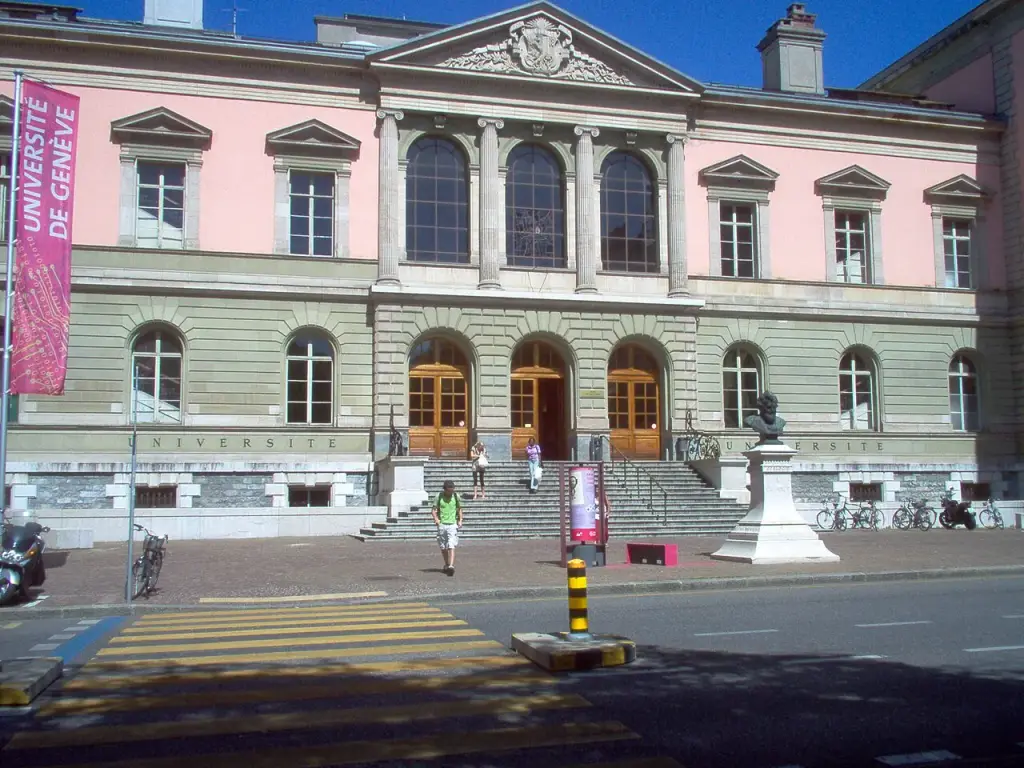
University of Geneva
French-language research university in the heart of international Geneva
Photo: Alexmar983 · Public domain
- QS World Ranking 2027
- #168
- Founded
- 1559
- Students
- 18,000
- Bachelor's degree
- 3 years
- Acceptance rate
- Not published; an IB Diploma or A-levels that meet the conditions give access, with extra procedures for medicine and for translation and interpreting
- Typical IB offer
- 32 points (no bonus); 3 subjects at HL incl. maths or a science, 3 at SL from the published list
- Typical A-level offer
- 6 subjects: 3 A-levels (two B, one C; one in maths or a science) plus 3 GCSE grade 5 or AS grade C
- How admission works
- Certificates from countries outside the Lisbon Recognition Convention and the Council of Europe need the ECUS complementary exam (four required subjects, registration fee CHF 1 050 for 2026-27), held in August. Applicants who sit ECUS are exempt from UNIGE's French exam, because ECUS includes a C1 French test.
- Language of instruction
- French. Bachelor's teaching is in French, and UNIGE generally expects CEFR level B2; applicants who cannot certify it sit the university's French exam. Holders of a DELF B2 or DALF C1/C2 certificate earned within the last four years are exempt from the general part of that exam, as are ECUS candidates.
Worth knowing
UNIGE was founded in 1559 by John Calvin and Theodore Beza. Today 40% of its students come from abroad, from 159 countries, and it works closely with the international organisations based in Geneva.
How hard is it to get in, and why
Admission is formal: an IB Diploma or A-levels that meet the published subject and grade conditions give access to the bachelor's programmes, with no essays or interviews. Human and dental medicine and the Faculty of Translation and Interpreting add their own admission procedures. The practical hurdle is French: UNIGE generally expects B2 and sets its own French exam for those who cannot certify it.
What it costs
Tuition
$1k per year
UNIGE charges CHF 500 per semester (CHF 65 fixed fees and CHF 435 tuition), with no separate rate for foreign students. The annual CHF 1 000 is a calculation, 2 × 500, two semesters a year (autumn and spring) per UNIGE's academic calendar; the fee page does not name an intake year. The living range is a calculation from the university's estimate of CHF 1 800–1 900 a month, which includes CHF 100 of tuition: (1 800 − 100) × 12 = CHF 20 400 and (1 900 − 100) × 12 = CHF 21 600. The canton of Geneva asks non-EU students to prove CHF 20 000 for a year of study.
Living costs
$25k–26k per year
Scholarships and financial aid
UNIGE lists no entry scholarships for international bachelor's applicants. Its monthly grant is for students in a first bachelor's or master's who have already validated their first year at a recognised Swiss institution, with assets under CHF 20 000 and gross income under CHF 20 000, and it is not open to those whose family has international tax immunity. A new foreign student therefore cannot count on it in the first year.
How to apply
Applications go through UNIGE's online admissions platform. In the 2026-27 cycle the deadline was 30 April, and 28 February for applicants who need a visa or sit ECUS; these are last year's dates, and the 2027 entry dates are published each January. Medicine required pre-registration with swissuniversities by 15 February in that cycle. There are no essays or interviews. Applicants must document French at B2 or sit the university's French exam, and ECUS applicants take their exam in August and can only start in autumn.
Official websiteWhat makes it special
- 18 241 students in 2025, of whom 8 606 in bachelor's programmes; nine faculties and 13 interfaculty centres.
- Faculties of science, medicine, humanities, law, theology, psychology and education, translation and interpreting, economics and management, and social sciences.
- The Global Studies Institute is one of the interfaculty centres, which suits students interested in international affairs.
- UNIGE is a member of LERU, the League of European Research Universities.
- Geneva is one of the most expensive cities in the world, and UNIGE warns that finding a room can be nearly impossible close to the start of term.
About studying in Switzerland
ETH Zurich and EPFL sit in the world's top twenty and charge a few thousand francs a year, roughly a tenth of a US private university. The bachelor's is taught in German (ETH) or French (EPFL), and holders of an IB Diploma with the right subjects are admitted without competition. The filter comes later: a block of first-year examinations that close to half of the intake fails. Zurich and Lausanne are among the most expensive cities in Europe to live in.
Teaching staff
The dossier on teaching staff for this university is still being written.
The campus in photographs
Photographs come from Wikimedia Commons under free licences; the author and licence are shown on each image.
Reviews
No reviews yet. Visited, applied, or studied here? Be the first.