
Germany · Berlin
Freie Universität Berlin
Berlin's large humanities and social-science university with no tuition and one English-taught bachelor's
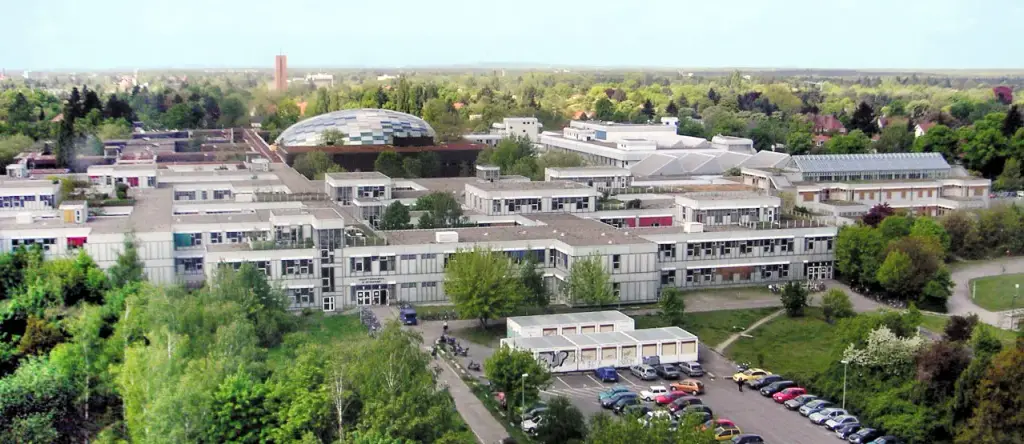
Photo: torinberl · CC BY-SA 3.0
- QS World Ranking 2027
- #98
- Founded
- 1948
- Students
- 35,000
- Bachelor's degree
- 3 years
- Acceptance rate
- Not published; admission-restricted subjects select by grade, others admit applicants who meet the requirements
- Typical IB offer
- Diploma: 2 languages, science, maths, social science, grade 4+; 1+ HL in language, maths or science
- How admission works
- A foreign certificate needs a valid uni-assist document check (VPD), valid one year and issued for FU, uploaded in FU's own application portal within the deadline. Applicants who already know they need the Studienkolleg should still request the VPD for the bachelor's. The IB conditions are the national KMK rules; Maths at SL gives only subject-specific entrance (except for schools on the KMK exception list), and one grade 3 is allowed if offset by a 5 and 24 points elsewhere.
- Language of instruction
- German for almost all bachelor's programmes; North American Studies (Bachelor of Arts) is taught in English and needs no German. Elsewhere C1 is required with the application (TestDaF 4/4/3/3, DSH-1 or a graded C1 certificate), and DSH-2, TestDaF 4 in all parts or telc C1 Hochschule at enrolment.
FU states no IB points cut-off and no A-level requirement; the IB subject conditions above come from the KMK recognition agreement. Whether a certificate gives direct access or leads to the Studienkolleg is decided in the document check.
Worth knowing
FU was founded in 1948. Its fee page lists a €226.80 public-transport ticket inside the €376.80 semester contribution for winter 2026/27, so about 60% of the contribution is the ticket.
How hard is it to get in, and why
Most FU programmes have restricted admission, selected by grade among other criteria (deadline 15 July); unrestricted ones admit everyone who qualifies (deadline 1 September). The university publishes no acceptance rate. The filter for an international applicant is formal: a valid uni-assist document check (VPD) and German at level C1 at the time of application. All but one bachelor's programme taught in English also need German.
What it costs
Tuition
$800 per year
FU charges no tuition for bachelor's students; each semester a contribution is due: €376.80 for winter semester 2026/27 and €358.80 for summer semester 2026, so one of each comes to about €736. The contribution includes the public-transport semester ticket (€226.80 in winter 2026/27) for eligible students. FU gives no total living budget; the figure is the German student-visa minimum of €992 a month (€11,904 a year), and it is a floor, not a typical budget.
Living costs
$13k per year
Scholarships and financial aid
FU itself states that it does not award any grants or scholarships. It points international students to the DAAD scholarship database, and BAföG federal aid goes to non-German nationals only in exceptional cases.
How to apply
Apply in two steps: request a uni-assist document check (VPD) all year round, then apply in FU's portal with the VPD. Deadlines are 15 July for admission-restricted undergraduate programmes and 1 September for unrestricted ones, and the uni-assist check can take up to eight weeks before that. Proof of German at C1 goes in with the application. Applicants with certificates from China, India or Vietnam also need an APS certificate.
Official websiteWhat makes it special
- 34,900 students in winter semester 2025/26; 13% of bachelor's students come from abroad.
- 180 degree programmes, 81 of them bachelor's and other undergraduate programmes.
- North American Studies (Bachelor of Arts) is taught in English and needs no German for admission.
- The VPD is valid for one year, so it can be requested a year before the application and reused for the next one.
- A range of Master's programmes in English (Physics, Mathematics, Data Science, Bioinformatics and others) for those who continue.
About studying in Germany
Public universities are close to free for most students; Bavaria, where TU Munich sits, has introduced a fee for students from outside the EU, still a fraction of Anglo-American prices. Most bachelor's programmes are taught in German (level C1 is expected), with a growing number in English. Admission for an IB Diploma is largely formal, and the real test is keeping up with a demanding, self-directed course.
Teaching staff
The dossier on teaching staff for this university is still being written.
The campus in photographs
Photographs come from Wikimedia Commons under free licences; the author and licence are shown on each image.
Reviews
No reviews yet. Visited, applied, or studied here? Be the first.