
Denmark · Kongens Lyngby, near Copenhagen
Technical University of Denmark
Denmark's technical university, with one English-taught bachelor's degree
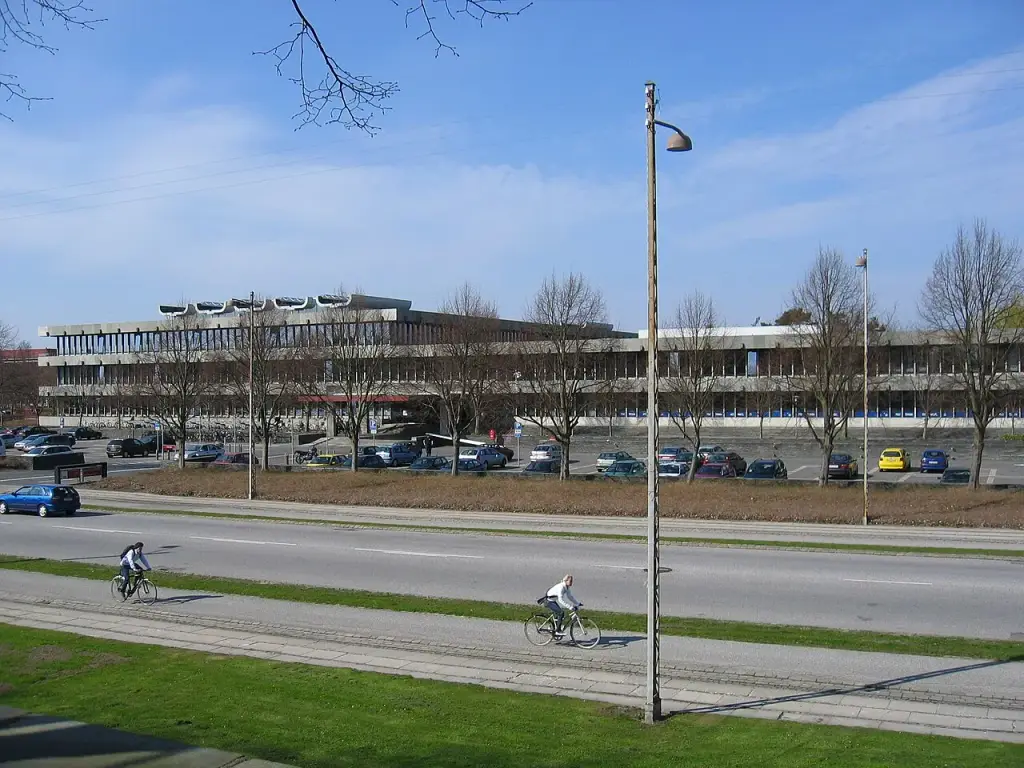
Photo: This file was made by Thomas Hindsgaul, and should be credited as such. If you m · CC BY 2.5 dk
- QS World Ranking 2027
- #105
- Founded
- 1829
- Students
- 13,500
- Bachelor's degree
- 3 years
- Acceptance rate
- Not published; 150 places on the English-taught BSc, allocated by quota 1 (grade ranking) and quota 2 (assessment)
- Typical IB offer
- IB Diploma, at least 24 points; Danish-level Mathematics A, Physics B, Chemistry B, English B
- How admission works
- Applications go through optagelse.dk. All applicants with an international qualification must also show IELTS Academic 6.5, Cambridge C1 Advanced/C2 Proficiency 180, or TOEFL iBT 88 (4.5 on the page's new scale for tests after 21 January), but IB Diploma holders are exempt from the English test. Applicants who lack a subject level must take supplementary courses.
- Language of instruction
- One English-taught bachelor's (BSc in General Engineering, all courses in English); all other bachelor's programmes are taught in Danish. English B level is required.
DTU publishes the 24-point IB bar as the minimum that qualifies for admission, not as a competitive score: quota 1 admits by GPA ranking and publishes no cut-off in advance. DTU states no A-level requirement.
Worth knowing
DTU's General Engineering programme is about 60 percent international and 40 percent Danish. Semester five is set aside for study abroad, and students pick one of four specialisations: Living Systems, Advanced Materials, Cyber Systems or Future Energy.
How hard is it to get in, and why
The English-taught BSc in General Engineering has 150 places. Quota 1 ranks IB holders by grade average, and the cut-off is the last admitted applicant's GPA, known only on 28 July. Quota 2 weighs a motivational letter and CV in English, results in mathematics, physics and chemistry, and work experience. All other DTU bachelor's programmes are taught in Danish.
What it costs
Tuition
$17k per year
DTU states the tuition fee is EUR 15,000 per academic year, paid one semester at a time at EUR 7,500; non-EU/EEA applicants also pay a EUR 100 application fee, deducted from the first payment. Living: DTU's student budget gives EUR 1,244-1,840 a month living on campus and EUR 1,650-2,800 a month living off campus; the yearly figures (EUR 14,928 and EUR 33,600) are calculations (x12). The Danish immigration agency (SIRI) requires proof of DKK 7,426 a month (2026 level), DKK 89,112 for 12 months, unless the first semester's tuition has been paid.
Living costs
$17k–38k per year
Scholarships and financial aid
DTU states that it offers no scholarships or tuition fee waivers at undergraduate level. EU/EEA citizens pay no tuition.
How to apply
Apply through optagelse.dk between 1 February and the deadline of 15 March at 12:00; IB applicants fall under this deadline for both quota 1 and quota 2. Non-EU/EEA applicants pay the EUR 100 application fee by 15 March. IB holders applying in the year they sit the exam must ask their IB coordinator to let DTU see the Diploma online before 1 June. DTU also offers a pre-assessment of international qualifications between 1 September and 1 November. Offers appear on 28 July.
Official websiteWhat makes it special
- 13,500 students and 6,000 employees, according to DTU.
- BSc in General Engineering: 150 places, taught in English, built around design-build projects.
- Campus in Lyngby, north of Copenhagen; the English-taught programme runs there.
- Most graduates continue to a two-year master's to earn the title Master of Science in Engineering.
About studying in Denmark
Bachelor's degrees take three years, and applications go through the national portal Optagelse.dk; at the IT University of Copenhagen (ITU) the non-EU deadline is 15 March at noon. The University of Copenhagen teaches all 78 of its bachelor's programmes in Danish and offers English only at master's level, so check the teaching language of each programme at other institutions; ITU, for example, asks non-EU applicants for English test scores. Non-EU students pay tuition set by each institution; as one example, ITU charges EUR 8,250 a year for 2026 admission (EUR 49,500 for the three years) plus a EUR 150 application fee. At the University of Copenhagen a bachelor's is taught in Danish.
Teaching staff
The dossier on teaching staff for this university is still being written.
The campus in photographs
Photographs come from Wikimedia Commons under free licences; the author and licence are shown on each image.
Reviews
No reviews yet. Visited, applied, or studied here? Be the first.