Switzerland · Bern
University of Bern
Full-range German-language university in the Swiss capital
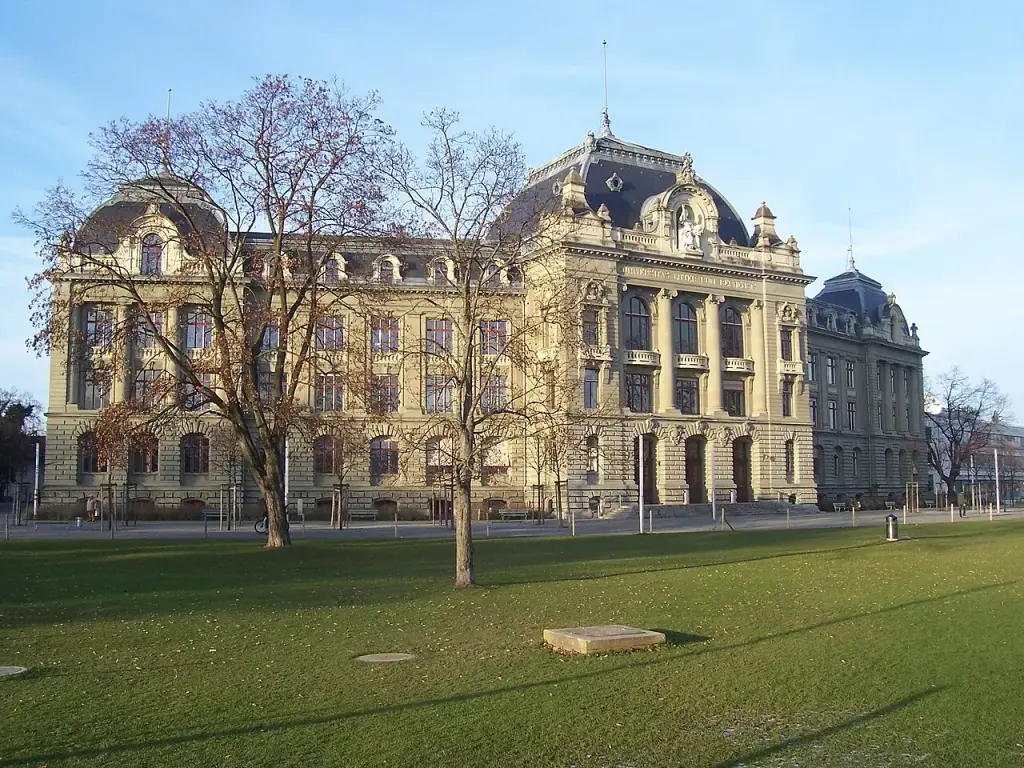
Photo: Woudloper · Public domain
- QS World Ranking 2027
- #191
- Founded
- 1834
- Students
- 20,000
- Bachelor's degree
- 3 years
- Acceptance rate
- Not published; an IB Diploma or A-levels that meet the conditions give access, with aptitude tests for medicine and possibly sport science
- Typical IB offer
- 32 of 42 points (no bonus), six subjects across the required groups, at least 3 at HL incl. maths or a science
- Typical A-level offer
- 3 A-levels (B, B, C; one maths or science) plus 3 GCSE grade 5/B or AS grade C; UK system
- How admission works
- Under its 2026/27 admission requirements Bern recognises the IB Diploma and UK A-levels directly; the IB and UK entries list no supplementary examination. The six subjects must cover first language, second language, maths, a natural science, a humanities or social science subject and one free choice.
- Language of instruction
- German. At bachelor level the teaching language is always German, except for the study of foreign languages. If German is not your native language you need proof of C1 (Goethe C1, telc C1, TestDaF 4 in every part, DSH, DSD II and others) or must pass the university's German test, held about three weeks before the fall lectures; registration for it closes on 31 July.
Worth knowing
The University of Bern was founded in 1834, building on a collegiate school and academy that dates from 1500. It warns that fake scholarship offers circulate in its name and that it neither awards scholarships itself nor runs entrance exams abroad.
How hard is it to get in, and why
Admission is formal: an IB Diploma or A-levels that meet the published subject and grade conditions give access to the bachelor's programmes. For medicine, dental medicine and veterinary medicine swissuniversities sets an aptitude test whenever applications exceed places, and a test is expected for sport science. The practical hurdle is German: teaching is in German and C1 is required.
What it costs
Tuition
$6k per year
From fall semester 2026 non-Swiss students who lived outside Switzerland and Liechtenstein when they gained their entrance qualification pay CHF 850 tuition plus CHF 1 700 extra, CHF 2 550 per semester, and a CHF 34 semester fee. The annual CHF 5 168 is a calculation, 2 × (850 + 1 700 + 34), two semesters a year (fall and spring) per the university's academic calendar; members of the Student Union pay CHF 25 per semester in addition to the semester fee, and the page gives no 2027 rate. The living range is a calculation from the university's monthly estimate of CHF 1 500–2 200 (excluding tuition), × 12; the university's visa factsheet asks for proof of CHF 18 000 a year, which is also the lower end.
Living costs
$22k–32k per year
Scholarships and financial aid
The University of Bern says it does not award scholarships itself. Its fees page adds that the Admissions Office cannot exempt anyone from paying fees.
How to apply
Applicants apply online before the deadline and send the required documents in paper form to the Admissions Office. The 2026/27 requirements set 30 April for non-medical bachelor's programmes in the fall semester, with no late application for those who need a visa, and 15 February for medicine, dental medicine, veterinary medicine and the first semester of sport science; dates for fall 2027 are not on the pages. Non-native German speakers need a C1 certificate or must pass the university's German test.
Official websiteWhat makes it special
- 19 741 students were registered in fall 2025, 8 014 of them at bachelor's level; 21% are foreign nationals.
- Bachelor's teaching is in German except for the study of foreign languages.
- Fall semester 2027/28 lectures run from 20 September to 24 December 2027, and spring lectures from 21 February to 2 June 2028.
- Medicine, dental medicine and veterinary medicine admit through an aptitude test set by swissuniversities when applications exceed places.
About studying in Switzerland
ETH Zurich and EPFL sit in the world's top twenty and charge a few thousand francs a year, roughly a tenth of a US private university. The bachelor's is taught in German (ETH) or French (EPFL), and holders of an IB Diploma with the right subjects are admitted without competition. The filter comes later: a block of first-year examinations that close to half of the intake fails. Zurich and Lausanne are among the most expensive cities in Europe to live in.
Teaching staff
The dossier on teaching staff for this university is still being written.
The campus in photographs
Photographs come from Wikimedia Commons under free licences; the author and licence are shown on each image.
Reviews
No reviews yet. Visited, applied, or studied here? Be the first.