Switzerland · Basel
University of Basel
Switzerland's oldest university, built around life sciences and medicine
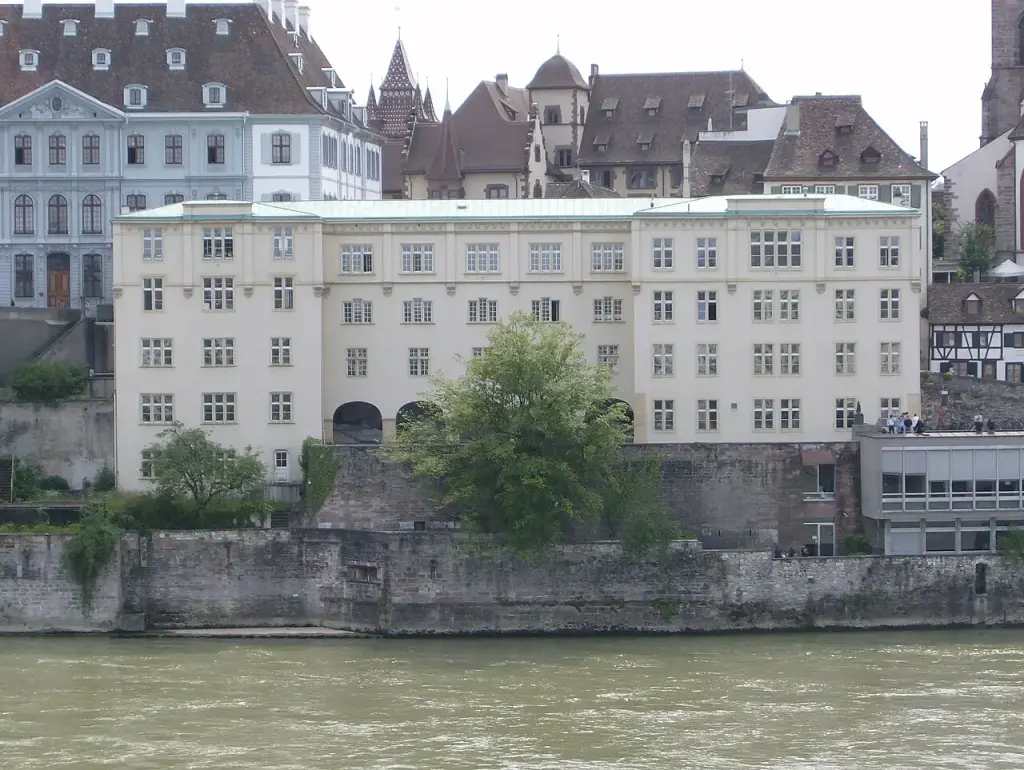
Photo: Gulliveig · Attribution
- QS World Ranking 2027
- #150
- Founded
- 1460
- Students
- 14,000
- Bachelor's degree
- 3 years
- Acceptance rate
- Not published; an IB Diploma or A-levels that meet the conditions open all bachelor's programmes without a quota, except those with admission restrictions
- Typical IB offer
- 32 of 42 points (no bonus) in six subjects across the required groups; one of group 4 or 5 at HL
- Typical A-level offer
- 3 A-levels (B, B, C; maths or a science at least C) plus 3 GCSE grade 5/B or AS grade C, all from the UK system
- How admission works
- Basel recognises foreign certificates under its own country list for 2026/27, and for the IB it requires one group 4 or 5 subject at HL (the swissuniversities table lists at least 3 HL for Basel; the IB figure here follows Basel's own regulations). Certificates from countries outside the Lisbon Recognition Convention need a minimum overall grade and the ECUS complementary exam, held once a year in August.
- Language of instruction
- German. Bachelor's teaching and examinations are predominantly in German, and the university advises language skills at CEFR level C1 before you begin; it names no required certificate in its regulations.
Worth knowing
The university opened with a mass in Basel Minster on 4 April 1460, and Erasmus of Rotterdam spent time in the city, which helped make it a centre of humanism. Its Faculty of Medicine has existed since the founding.
How hard is it to get in, and why
Admission is formal: if the IB or A-level subjects and grades meet the published conditions, you are in, without essays or interviews. Programmes with admission restrictions, such as clinical medicine, dental medicine and sport, have their own earlier deadline and special requirements. The practical hurdle is German, the main language of instruction.
What it costs
Tuition
$2k per year
Tuition is CHF 850 per semester in all faculties, the same for Swiss and foreign students. The annual CHF 1 700 is a calculation, 2 × 850, two semesters a year (autumn and spring) per Basel's academic calendar; the fee table does not name an intake year. The living range is a calculation from the university's sample monthly budget of CHF 2 050–2 150 for a student not living with parents, which includes CHF 140 a month of tuition: (2 050 − 140) × 12 = CHF 22 920 and (2 150 − 140) × 12 = CHF 24 120. The lower end is raised to CHF 24 000, the amount the university's visa page asks applicants to prove (generally at least).
Living costs
$29k per year
Scholarships and financial aid
The university lists no entry scholarships for international applicants. Its own fund helps students with very limited resources, mostly with partial scholarships of CHF 200 to 600 a month in the final phase of a bachelor's or master's, and a student-body solidarity fund pays CHF 500 to 1 000 per semester. The university does not state that these funds are open to foreign applicants.
How to apply
Applications are made online. For autumn 2027 the window opens on 1 February 2027 and the deadline for applicants with foreign qualifications is 30 April 2027; the application fee is CHF 100. Medicine and dental medicine have a deadline of 15 February 2027 and go through swissuniversities, and sport, exercise and health has its own window up to 15 February 2027. There are no essays or interviews. Applicants who need a visa must send the visa application by the end of July.
Official websiteWhat makes it special
- 13 707 students and doctoral candidates enrolled in autumn 2025; medicine is the largest faculty with 25.2%.
- Seven faculties; economics became its own faculty in 1997 and psychology in 2003.
- The university describes itself as research-oriented with an emphasis on life sciences and medicine, in the science and innovation hub of the Basel region.
- Basel sits where Switzerland, Germany and France meet.
- Students come from more than 100 countries.
About studying in Switzerland
ETH Zurich and EPFL sit in the world's top twenty and charge a few thousand francs a year, roughly a tenth of a US private university. The bachelor's is taught in German (ETH) or French (EPFL), and holders of an IB Diploma with the right subjects are admitted without competition. The filter comes later: a block of first-year examinations that close to half of the intake fails. Zurich and Lausanne are among the most expensive cities in Europe to live in.
Teaching staff
The dossier on teaching staff for this university is still being written.
The campus in photographs
Photographs come from Wikimedia Commons under free licences; the author and licence are shown on each image.
Reviews
No reviews yet. Visited, applied, or studied here? Be the first.