
Australia · Canberra, Australian Capital Territory
Australian National University
Australia's national university in the capital, built around research and public policy
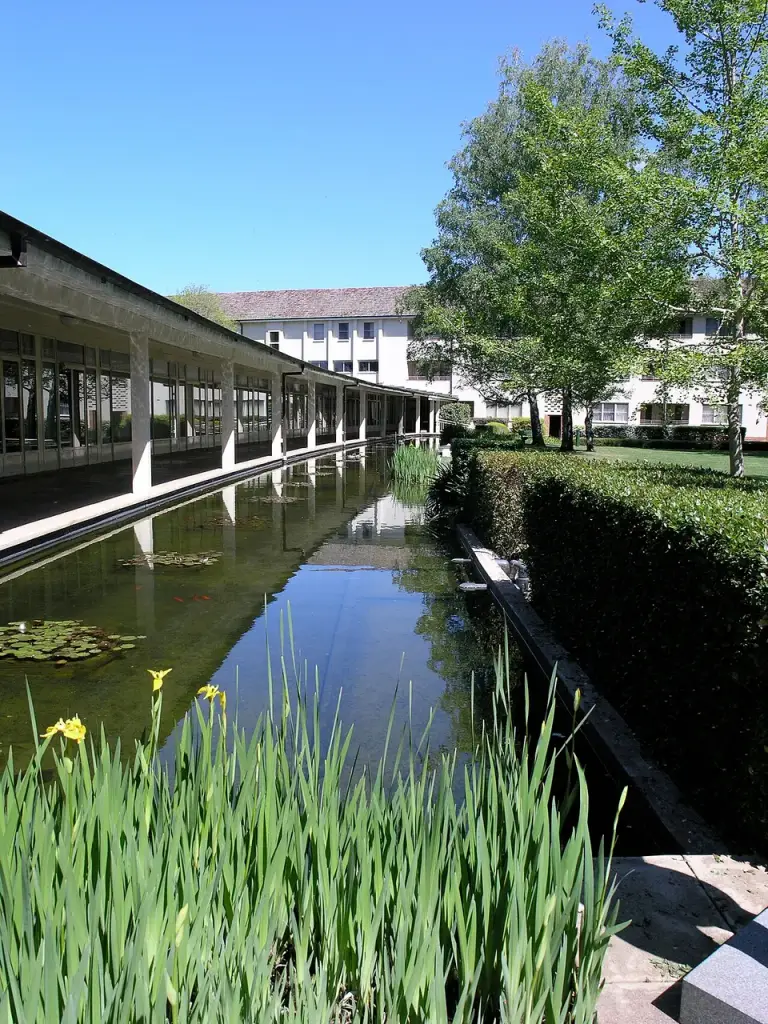
Photo: Dave Snowden · CC BY-SA 2.0
- QS World Ranking 2027
- #29
- Founded
- 1946
- Students
- 24,000
- Bachelor's degree
- 3 years
- Acceptance rate
- Not published; admission by selection rank, with an IB equivalent for each programme
- Typical IB offer
- 31–41 points by programme (Arts, Science, Commerce 31; Engineering 33; PPE 38; Laws 41)
- Typical A-level offer
- 13–17 points, best 3 subjects (A*=6, A=5, B=4); Arts, Science 13, Engineering 14, Laws 17
- How admission works
- IB applicants apply through UAC; applying directly to ANU means no subject adjustment factors. The application fee is A$150 per direct application.
- Language of instruction
- English
These are ANU's indicative scores for guaranteed entry, and the A-level scores are converted from ANU's published rank-to-GCE table; programmes are also considered from a lower rank (70 in Arts, Science and Engineering, about IB 27), but ANU says meeting requirements does not guarantee entry.
Worth knowing
ANU was created by an Act of the federal parliament in 1946 and is the first and only national university in Australia. Its Nobel laureates include Brian Schmidt (Physics, 2011), and Canberra is a three-hour drive from Sydney and two hours from both the snow and the sea.
How hard is it to get in, and why
Each programme has a minimum-consideration rank and a guaranteed-entry rank, and ANU converts them to IB points: 31 for Arts, Science and Commerce, 33 for Engineering, 38 for Politics, Philosophy and Economics, 41 for Laws (Honours). ANU warns that admission to some programmes is competitive, so meeting the score does not guarantee a place, and some programmes add selection criteria beyond marks.
What it costs
Tuition
$34k–45k per year
2027 international fees run by discipline band: A$47,940 a year for arts, education and creative arts, A$54,540 for law and political science, A$57,640 for science, engineering, IT, commerce and economics, and A$64,130 for medical science. ANU says fees are reviewed annually and may increase during a degree. Living costs: ANU estimates A$33,000 to A$39,000 a year to live on your own in Canberra, which is above the A$29,710 student-visa requirement.
Living costs
$23k–27k per year
Scholarships and financial aid
The ANU international application page marks several programmes as “Scholarships available”, and each programme page has a scholarships tab. The university's pages do not name a single award open to all international undergraduates, so check the tab of the programme you want.
How to apply
Applicants completing the IB apply through UAC; others can apply through ANU's online portal for up to three programmes in order of preference. For Semester 1 2027, applications close on 15 December 2026, and programmes with additional selection criteria may have different deadlines. Each programme page lists a minimum-consideration rank, a guaranteed-entry rank and any prerequisites. ANU may issue a conditional offer if documents are still missing.
Official websiteWhat makes it special
- Six Nobel laureates are linked to ANU, including Peter Doherty and Rolf Zinkernagel (Medicine, 1996) and John Harsanyi (Economics, 1994).
- Students come from across Australia and 100 countries.
- The Bachelor of Politics, Philosophy and Economics sits at IB 38, against 31 for Arts and 41 for Laws (Honours).
- Campus life centres on the Kambri precinct, which hosted 867 public events and 85 events at Llewellyn Hall in the latest annual report.
- Bachelor degrees are three years (Arts, Science, Commerce) or four (Engineering, Laws, Advanced Computing).
About studying in Australia
Three-year degrees, two intakes a year (February and July) and admission by IB score, with programme-specific thresholds. Applications go directly to the university and decisions are usually quick. International tuition at Melbourne and Sydney is around US$30,000 to US$40,000 a year, and bachelor's graduates can stay to work for two years on the Temporary Graduate visa.
Teaching staff
The dossier on teaching staff for this university is still being written.
The campus in photographs
Photographs come from Wikimedia Commons under free licences; the author and licence are shown on each image.
Reviews
No reviews yet. Visited, applied, or studied here? Be the first.